The question that matters
Two friends, a quiet corner and warm chai. Is life governed by destiny, or do we truly have freewill?
01 · Preface02 · What’s in a Name?03 · The Question That Started Everything
A calm manthan on how destiny moves, and how we move
Understanding what you control, and what you don’t.
 By Tejash Shah · Amazon bestselling author of 10 books
Two friends, one quiet corner and a cup of chai. One asks the question India has asked for thousands of years: if everything is already written, why do anything?

 #1 Amazon Best Seller in Spiritual Self-Help eBooks
A simple conversation that explains destiny, freewill and karma with rain, umbrellas, job losses, the Gita, Osho and ten days of Vipassana. No jargon, no lectures, and a lot of gentle humour.
Try it in ten seconds · destiny or freewill?
Chapter 3 · The question that started everything
A peaceful corner, the kind of place where even the wind feels like it is in meditation.
The QuestionerTell me honestly… if everything in life is already written, then why are we doing anything?
The QuestionerIf destiny controls everything, should I just sleep all day and blame destiny when my life goes nowhere?
The GuideYou know, this question is as old as our rishis. And you’re asking it like you’re ordering samosa.
The QuestionerArrey yaar, wisdom can come during samosa also. But seriously, if everything is destiny, why do anything?
The GuideOkay. Let’s talk. But we will go slowly. One step at a time. No rush.
He nodded like a student ready for class. A funny student, but still a student.
04Understanding destiny
You don’t control when it rains. You don’t decide when the sun shines. Your birth, your family, a sudden fever, a boss who changes the project: the part of life that comes to you, not from you.
“You can blame it, but it won’t change the cloud.”
06FreeWill explained again
Destiny puts rain outside. You can carry an umbrella, get annoyed, dance, or sit inside and enjoy chai. The rain was never your choice. The response always is.
It’s raining. What do you do?
07When freewill slowly turns into destiny
Destiny gives the situation. You respond with freewill. Your response creates a result, and that result becomes your new destiny.
“If you created a habit, you can uncreate it.”
Tap the water to make a choice
14The saint and the two legs
A seeker asked a saint, “Do I have freewill, or is everything destiny?” The saint didn’t lecture. He asked him to stand.
Play and reflect
Short, calm games drawn from the book. No app, no sign-up. Every result comes with a line from the conversation and its own page to share.
Ten life moments. Given by life, or shaped by you?
Play now 3 minOne choice. Watch it ripple forward.
Play now 3 minEight honest questions. Where does your energy go?
Play now 5 minYou ask. The Guide answers. Then the final exam.
Play now10 games played so far
Meet the characters
They have no names, professions or backgrounds, because they could be anyone. What matters is how they think.
“If everything in life is already written, then why are we doing anything?”
Curious, restless and sincere, he voices the thoughts most people carry silently. Why does life feel unfair? Why doesn’t effort always lead to results? He jokes, argues like a lawyer, and insists his brain “likes slowly”. He is not weak; he is brave enough to ask.
“Destiny is what life gives you. FreeWill is what you give back.”
Calm and clear, never preachy. He explains life with rain, umbrellas and job losses rather than jargon, draws on Indian scriptures, Osho and his own Vipassana practice, and never asks to be agreed with, only understood. He does not argue; he reveals.
Inside the book
Readers say
A quietly powerful read
“This book doesn’t lecture or preach. Through simple conversations, it slowly changes how you look at effort, destiny, and acceptance.”
Clarity without complexity
“The ideas are deep, but the language is simple. It helped me understand karma and freewill without confusion or heavy philosophy.”
Thought-provoking and grounded
“Every chapter made me pause and reflect. The balance between questioning and understanding feels honest and real.”
A book you read slowly
“Not because it’s difficult, but because it makes you think. It stays with you even after you’ve finished reading.”
17The light-hearted ending
“Destiny gives the moment. FreeWill gives the meaning.”

Get your copy


In India, printed copies are ordered on WhatsApp (left).
Questions
It does not take sides. It explores how destiny and freewill coexist: some things in life are given, others are shaped by our choices, and understanding the difference brings clarity.
Not at all. The book avoids heavy philosophy and jargon. It uses a simple conversation and everyday examples like rain, traffic, a fever and a job loss, so anyone can follow it.
No. It draws on Indian wisdom, including the Bhagavad Gita, the Upanishads, Osho and Vipassana, but it does not promote any religion or belief system. The focus is understanding life, not following doctrine.
As cause and effect, not reward or punishment. Destiny gives the situation, you respond with freewill, your response creates a result, and that result becomes your next destiny.
Because real understanding often comes through dialogue, not instruction. Two friends talk over chai, one asking the questions most of us carry silently and one answering with patience and humour. It mirrors how we question life inside our own heads.
No. It explains where destiny ends and freewill begins: destiny is what cannot be changed, and anything that can be changed is freewill. Confusing the two creates unnecessary suffering.
More from Tejash Shah
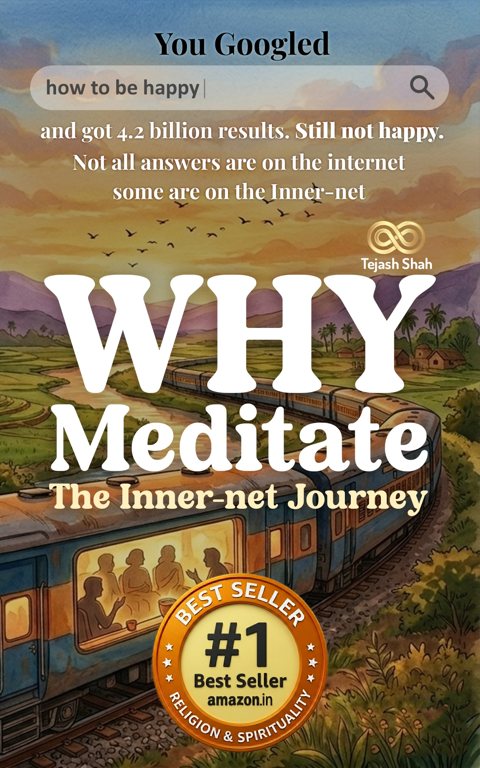
The Inner-net Journey
Not a meditation manual, and not a self-help book — a story. Six strangers share one train compartment between Jammu and Mumbai, and a conversation that begins over chai turns into the most honest one of their lives. Not all answers are on the Internet. Some are on the Inner-net.
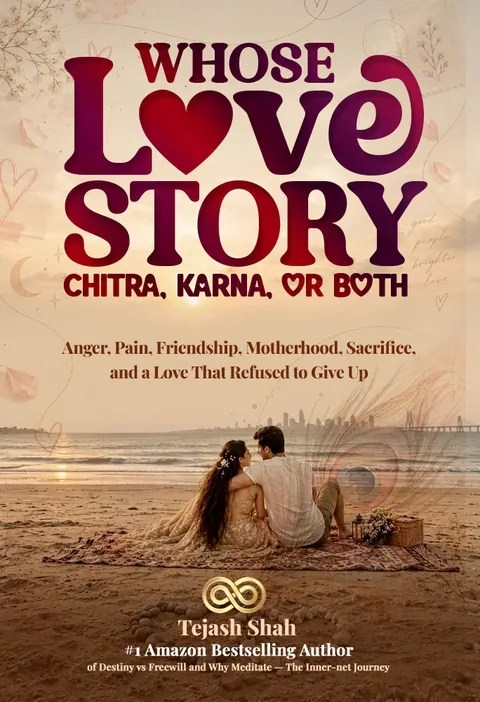
Chitra, Karna, or Both
A novel about the family you build when the one you were born into fails you. In a sea-facing home in Mumbai, everyone who has ever loved Karna and Chitra gathers to finally tell each other the truth — about anger, pain, friendship, motherhood, sacrifice, and a love that refused to give up.
The Stories You Read. The Lessons You Missed.
Thirty-four short stories collected from years of forwarded messages — the few that refused to leave. Each one gently edited, given room to breathe, and closed with a practical reflection. Meant to be read slowly, one chapter at a time.